Why you should read silly books with your kids
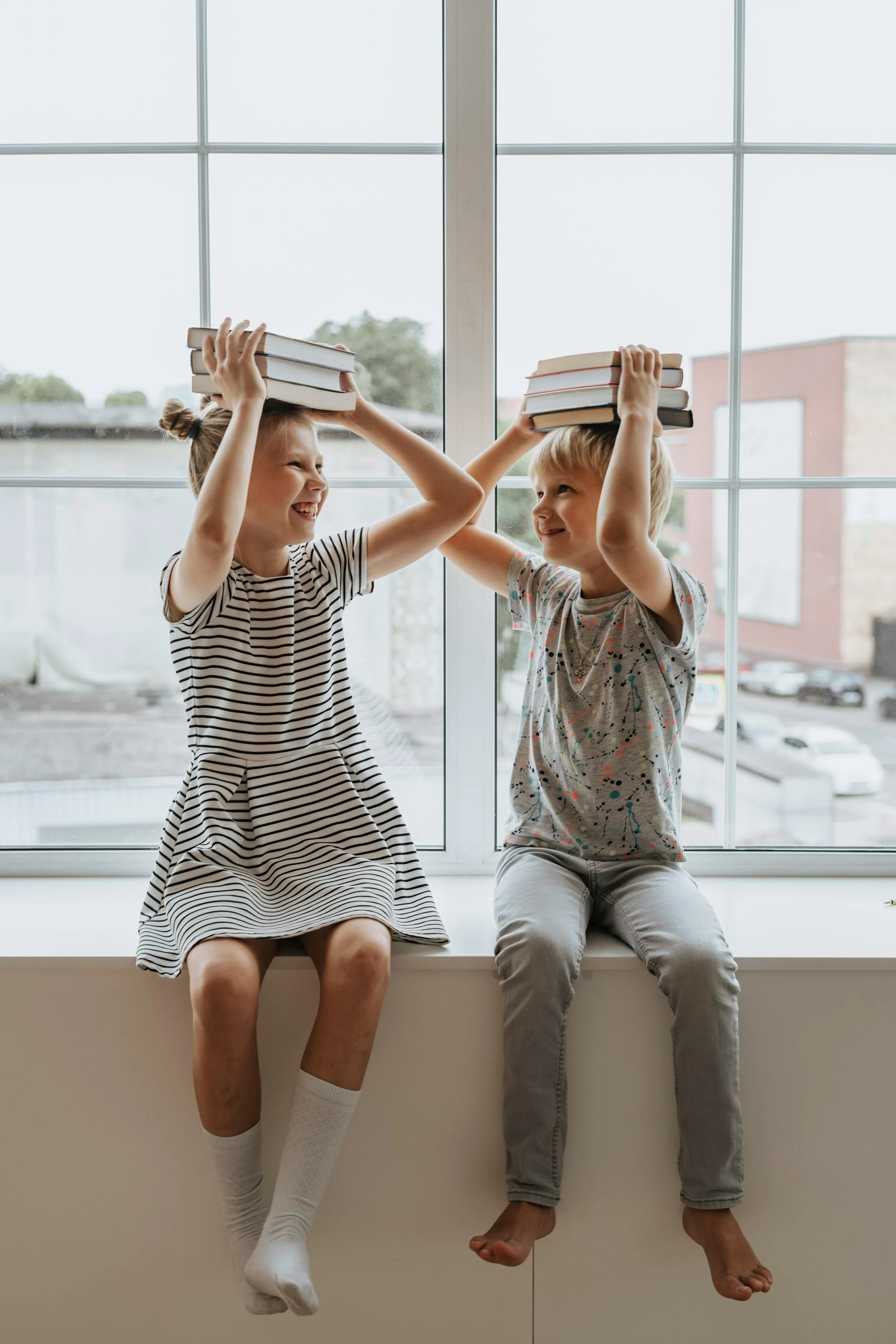
Olia Danilevich on Pexels
I walked with my four-year-old son to the bookshelf to choose a book for our afternoon read. I eyed the collection of Beatrix Potter books and the Bible retellings. “What about—”
“The moose! The moosey one!” he said, already pulling the flimsy book from the shelf.
I grimaced. “But we just read that one three times yesterday. Maybe we can read The Velveteen Rabbit?”
“The moose one. It’s my best” (i.e., his favorite).
Having little kids makes it hard to stay too serious. I read what I think is a deep and moving poem to them, meanwhile they are laughing at milk spilling out of one of their mouths. I want to read the serious stories to them, but they bring the silly book about a family trying to get rid of an oversized moose from their yard.
As parents who love literature, we can be a bit snobbish about the books our children want to read. Only the award-winning books with charming illustrations, lyrical prose, and a message they will carry with them for the rest of their lives. Right?
Being one of those snobbish parents, I’ve learned that there’s also a place for fun books. Books that are mostly just for laughs and silly voices. There’s no moral, no lesson to walk away with, no hope being renewed. The illustrations are quirky but the kids love them for it all the more. We need these books too.
We Need Silly Books For Laughter (to keep us going in a dark world)
In our pursuit of all that is true, good, and beautiful, we can forget that laughter fits into each of those categories. There is nothing less beautiful or good or true than a hearty laugh on the couch together over a story about a pigeon who won’t go to bed.
Great kidlit harnesses the power of levity and silliness. As cynical, weary adults, we take on a solemnity and seriousness that can make us feel heavy and dead. But children’s authors, especially those writing for children and middle-grade readers, must approach their writing with some levity. Their prose must have a lightness to it, and it thrives even more with witty or even silly humour. Some of our beloved and tattered books are both beautiful and hilarious—like The Gruffalo by Julia Donaldson and The Tale of the Flopsy Bunnies by Beatrix Potter.
As we get older and more hardened by life, this part of childlikeness becomes less natural. G. K. Chesterton wrote in his book Orthodoxy, “Pride is the downward drag of all things into an easy solemnity. One ‘settles down’ into a sort of selfish seriousness; but one has to rise to a gay self-forgetfulness. A man “falls” into a brown study; he reaches up at a blue sky . . . It is really a natural trend or lapse into taking one’s self gravely, because it is the easiest thing to do . . . For solemnity flows out of men naturally; but laughter is a leap. It is easy to be heavy: hard to be light. Satan fell by the force of gravity.”
With such a natural disposition towards solemnity, we need to make room for books that cultivate this gaiety in us as they draw light into our lives. To move from cynicism and bitterness, we all need not just a bit of wonder and an eye for beauty, but a heart that can laugh. I wonder if silly kids’ books can help lighten all our heavy hearts so we can better embody joy.
When Merry the hobbit is greatly harmed in battle, his friends worry he will not recover. But Aragorn tells them, “Do not be afraid . . . I came in time, and I have called him back. He is weary now, and grieved, and he has taken a hurt like the Lady Éowyn, daring to smite that deadly thing. But these evils can be amended, so strong and gay a spirit is in him. His grief he will not forget; but it will not darken his heart, it will teach him wisdom.”
Merry had experienced his share of grief—he had been displaced, stricken with the loss of his friends, pursued by the enemy, then captured by orcs who treated him with violence. And yet, a joyful spirit remained in him. Such a strong spirit, as Aragorn says, would not allow his heart to be darkened. Perhaps a bit of silly kidlit can help carry all of us along too?
Silly Books Help Kids Love Reading (and make reading not a chore)
If we only ever force our kids to read books that perhaps we loved but they do not, they’ll grow up to think most books are boring. Reading becomes a chore you have to do instead of a joy you get to do. If they love the books and want to read them, it soon builds a habit of sitting down to read, and then as the parent you can slip some of your favourite books in amongst theirs to help shape their literary palette.
My kids never would have picked up Roxenboxen or Island Boy on their own, but when I slipped them in-between a few of their favourite silly read-alouds, they became favourites too.
Children need the ability to learn to craft their own tastes, to become their own readers. Do we want them to grow up reading books because they think they should or because other people will praise them for reading them? Or because they truly love the experience of words and worlds blending together? As they pick out their own books, they begin to learn to discern good from bad, mediocre from better. They will never learn this unless we allow them the ability to choose their own books at times without us always telling them which ones are the best ones. Perhaps this begins with a few silly books about moose in treehouses or made up creatures like a Gruffalo.
I never want our read-aloud times to become a chore or something my boys groan about the moment they see me coming with a book. I never want our read-alouds to be wrought with fighting over which books we read. That’s why I strive for the balance of books they love and know with other books that stretch them and aren’t as familiar. Storytime is a time for us to bond and fall in love together with various characters and their lives and the art of a good story as we grow in our knowledge and understanding as a family.