Am I A Helicopter Parent for Being Picky About My Kids’ Books?
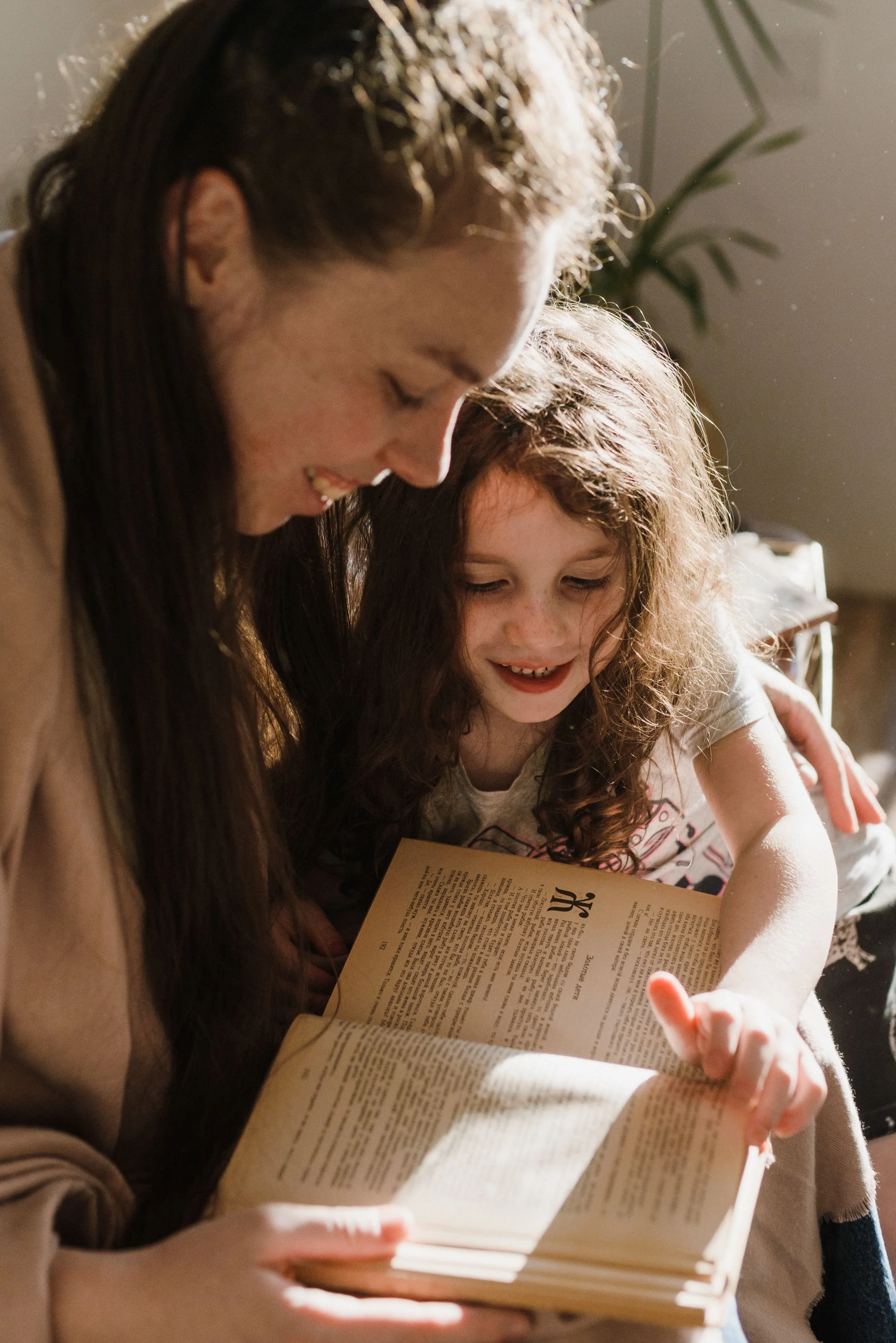
Photo by Arina Krasnikova
Left to their own devices, I’m certain my children would live off bread, chicken nuggets, sugary cereal, and ice cream. Maybe oatmeal and French toast once in a great while, but with plenty of maple syrup added. My job, as a parent, is to be the kill-joy who cooks broccoli and haddock instead.
A single, childless person was in my house recently and poked fun at my refrigerator. “All you have is healthy food in here!” How else do you get your children to eat healthy? You give them only healthy options. I believe my children eat the crust on their sandwiches and the peels on their apples because I never gave them an option otherwise (I’m not even sure they realize there is a crust on bread).
The same is true for why my children love playing outdoors—because I took them outdoors. As infants rolling around on a blanket in the shade shoving fist-fulls of grass in their mouth, to toddlers toddling around pointing at bugs, to kids climbing trees, my three boys and I have made playing outside a part of our regular routine. I taught them to love it.
The same is true for why my kids aren’t glued to screens; I never gave them the option to be. Since they were three, screen time has been once a day for a limited amount of time. For many years, there wasn’t even a TV in the living room. I taught them to love and choose other activities first before screen time because screen time wasn’t an option.
I’ve never thought of these things as making me a helicopter parent, and I don’t think most people would. It’s simply a part of training our children to love and want what is best.
Yet when it comes to literature, I have heard that accusation. Because I want to be discerning about what books I read with my children and I make available on our bookshelf, suddenly I am a helicopter parent. Because I want to feed my children a good diet of great literature, I’m being too controlling and snobbish. My children are still young, and I’ll readily admit that, but I believe my principles for children’s literature are no different than how I feed my children and regulate their screen time.
We Naturally Choose the Easier Books (Not the Best Books)
All of us, kids included, will always choose the path of least resistance, which means we will naturally gravitate towards what is easy but not necessarily the best. I will always choose Greek yoghurt instead of meat for my protein source because it’s easier to consume—but if that’s the only place I get protein, I probably won’t have enough.
We need to train ourselves and our children to do otherwise, to want what is best for us. We need to build habits of choosing what is better so that it becomes more natural and train our taste buds (both physical and literary) to gravitate towards what is better and greater.
In his book Adorning the Dark, Andrew Peterson writes about how he trained his children to love great music across genres. “I’ve taken it upon myself to teach the kids the artistic equivalent of junk food—stuff that’s an easy sell, made for money, banal at best, and corrupt at worst—so they would know that while it’s okay to have a few guilty pleasures, it’s better to seek out that which edifies, enlightens, strengthens, and to do so more and more over time.” His reasoning? “Long-term, the majority won’t choose what’s best for it. The masses—or at least those who don’t aspire to any sense of discernment—tend to choose the path of least resistance, which means the most bankable art is often the most vapid and loveless: noise, noise, noise. A clanging cymbal.”
The late Leslie Bustard said something similar about how she raised her children when it came to books. She wrote in Wild Things and Castles in the Sky, “A steady diet of dumbed-down stories, illustrations, and conversations will not prepare [our children] for all the glorious ways words can be used in times of joy and delight and times of sorrow and suffering.”
Were both Leslie and Andrew overbearing helicopter parents? I don’t think so.
Forming Our Children’s Imaginations (and Hearts and Minds) Through Great Books
We are not born with fully-formed imaginations. They are formed, and they are formed by what we consume. James K. A. Smith writes, “The imagination is acquired. It is learned. It is neither instinctual nor universal. We don’t all operate with the same sort of imagination . . . In other words, the social imaginary is shaped by the ways artists show us the world: our storytellers, image-makers, and performers of all kinds enact a story about who we are. This, of course, is also where we go wrong. Our imaginations are susceptible to malformation depending on what images we feed them, what stories they soak up. It’s the imagination—well- or malformed—that determines what I see before I look.”
Our hearts and minds are changed by what we read and look at and listen to, just as our bodies are changed by what we eat. The books we put in our children’s hands will alter them. The question is, what image will they be altered into? What paths will be carved into their brains? What words will be put into their mouths? What they consume will decide this. This is why Leslie Bustard went on to write that, “These young image-bearers of God will be formed by many, many things. Therefore, we must provide the children in our lives with words, conversations, and stories that will plant the seeds of abundance in their hearts and minds . . . and with these seeds growing in their lives, our children will have deeper roots to draw from in how they love, think, and speak.”
If we put books about courage, empathy, love, virtue, and hope in their hands, their minds and hearts will naturally be shaped around those things. If we want our children to be knights in shining armour to the bullied kid at school, stand up against villains, choose to hope when faced with despair and grief, cling to goodness when faced with the easy road of indifference, shouldn’t we put books that display these within their grasp?
How To Choose the Best of Books for Your Family’s Home Library
When we build a library of the best books for our children, their hearts will also be trained toward what kind of literature they turn to in the future. Charlotte Mason, an educator from the twentieth century, believed that when we put great art in front of our children over and over again, we will create a demand for such great art. We teach them to have a higher standard for what they look at, read, and listen to. For that reason, she said, children “must grow up upon the best. There must never be a period in their lives when they are allowed to read or listen to twaddle or reading-made-easy. There is never a time when they are unequal to worthy thoughts, well put; inspiring tales, well told. Let Blake’s ‘Songs of Innocence’ represent their standard in poetry; Defoe and Stevenson, in prose; and we shall train a race of readers who will demand literature, that is, the fit and beautiful expression of inspiring ideas and pictures of life.”
Andrew Peterson describes this exact situation happening with his children. His daughter, who had been raised on great music, was given a CD that made Peterson cringe. His daughter played a couple tracks from the CD, then popped it out of the CD player and said she didn’t really like it. Then she asked for one of the artists Peterson had raised her on. He had trained her to love what was good, and she grew up to choose it on her own.
The unfortunate truth is that bad books do exist. And I don’t mean unclean books or books with swear words or books with dark topics; they are often the backdrop for bright light of hope and true goodness. I don’t mean books that are fun and cleverly silly like The Gruffalo by Julia Donaldson or Two Bad Mice by Beatrix Potter—a book or movie that is simply fun can still be a celebration of good art with wit and humour.
I mean books that are dumbed-down, books that don’t have anything lasting to be carried with a child, books that are moralistic and force-feeding agendas, books with nothing beautiful about them. “Art is great only in proportion to the greatness of the idea that it expresses,” Charlotte Mason said. Or, as C. S. Lewis more wittingly put it, “I am almost inclined to set it up as a canon that a children’s story which is enjoyed only by children is a bad children’s story.”
There are plenty of twaddle, useless books in the world, and the world of kidlit is no exception. Parents who strive to fill their homes with the best ,greatest books are striving to teach their children to love what is good, beautiful, and true, to set their minds on higher ground and give them a step-up in the world.
There are many noble books being written for children, books full of laughter, joy, courage, loveliness, and hope. Why, when faced with such options, would we choose otherwise? Why not lay a literary feast for our children that will change and inform them for the rest of their lives?
Maybe that means you think I’m a helicopter parent. I’m okay with that.